
Real deck
The Real Sharkz, pre-seed deck
A real founder, a real raise, sixteen slides. Shown with the founder's written permission.
- Company
- The Real Sharkz (TRS), a reward-based backing platform for Indian startups, live at therealsharkz.in (opens in a new tab)
- Founders
- SM Zeyauddin (Founder & CEO) and Sahebdad (Co-founder & CTO)
- Stage
- Pre-seed, raising ₹2.07 Cr
- What I built
- This 16-slide investor deck (version 4, 17 September 2026) and the 3-year financial model behind it
- Fee
- None. It was a free project, so it is not counted in the paid-project total on the home page.
- Permission
- SM Zeyauddin agreed in writing on LinkedIn on 15 October 2026 that the deck can be shown here. The financial model stays private at his request, so it is not shown or offered for download.
- Outcome
- This page makes no claim about the raise. If the founder shares a result and agrees to it being published, it will appear here.
The slides say “Confidential” because they were written for investors. Nothing on them has been changed for this page.
What to look at first
- Slide 1: Title. The ask is on the cover. ₹2.07 Cr and “24 months, fully budgeted” come before any story, so an investor knows the size of the conversation from the first second.
- Slide 4: How backing works. The legal question is answered on slide 4 instead of being left for diligence. A reward-based platform stands or falls on whether it sells securities, so the slide says what a backer gives, what a backer gets, and why no security is offered.
- Slide 8: Market, built bottom-up. The market is counted from the founder's own tables: listings × completion rate × average raise. It also states the hard constraint, about 964,000 active backers by Year 3, instead of hiding it.
- Slide 10: Financials. One model produces every figure, and the table shows the working: revenue minus payment processing minus points cost equals contribution in all three years. Year 1: ₹34.6 lakh minus ₹6.0 lakh minus ₹6.5 lakh is ₹22.1 lakh.
- Slide 12: Unit economics. The failing case sits next to the working one. At the planned ₹52 blended acquisition cost, lifetime value is 3.2 times cost; at ₹250 paid-only it is 0.66 times. Showing where the model breaks is what makes the working case believable.
- Slide 15: The ask: use of funds and runway. The ask, the burn and the runway are one calculation: ₹8.63 lakh a month × 24 months = ₹2.07 Cr, and the five use-of-funds lines add up to 100%.
All 16 slides
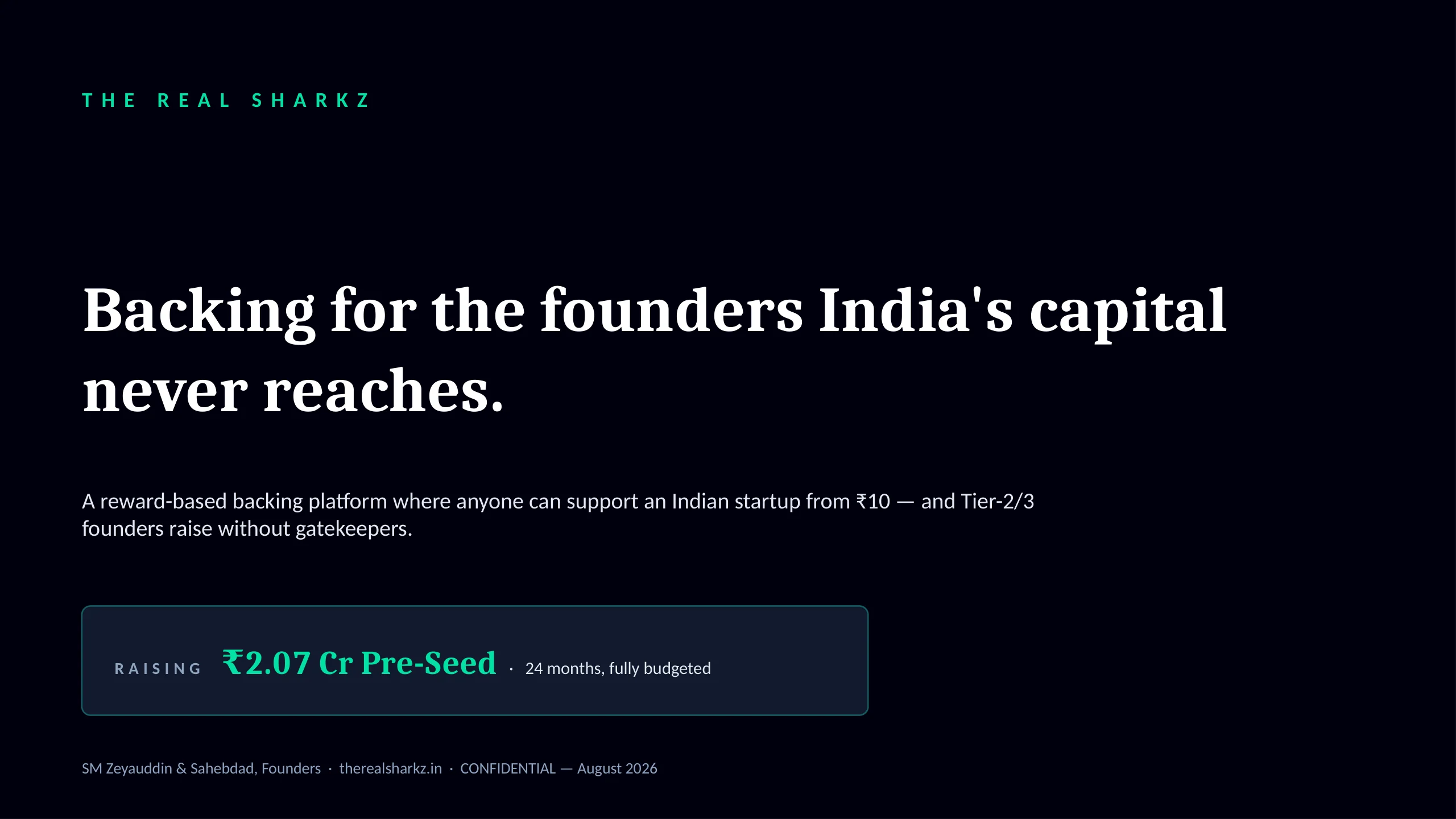 (opens full size in a new tab)
Slide 1 of 16: TitleWhy it works. The ask is on the cover. ₹2.07 Cr and “24 months, fully budgeted” come before any story, so an investor knows the size of the conversation from the first second. 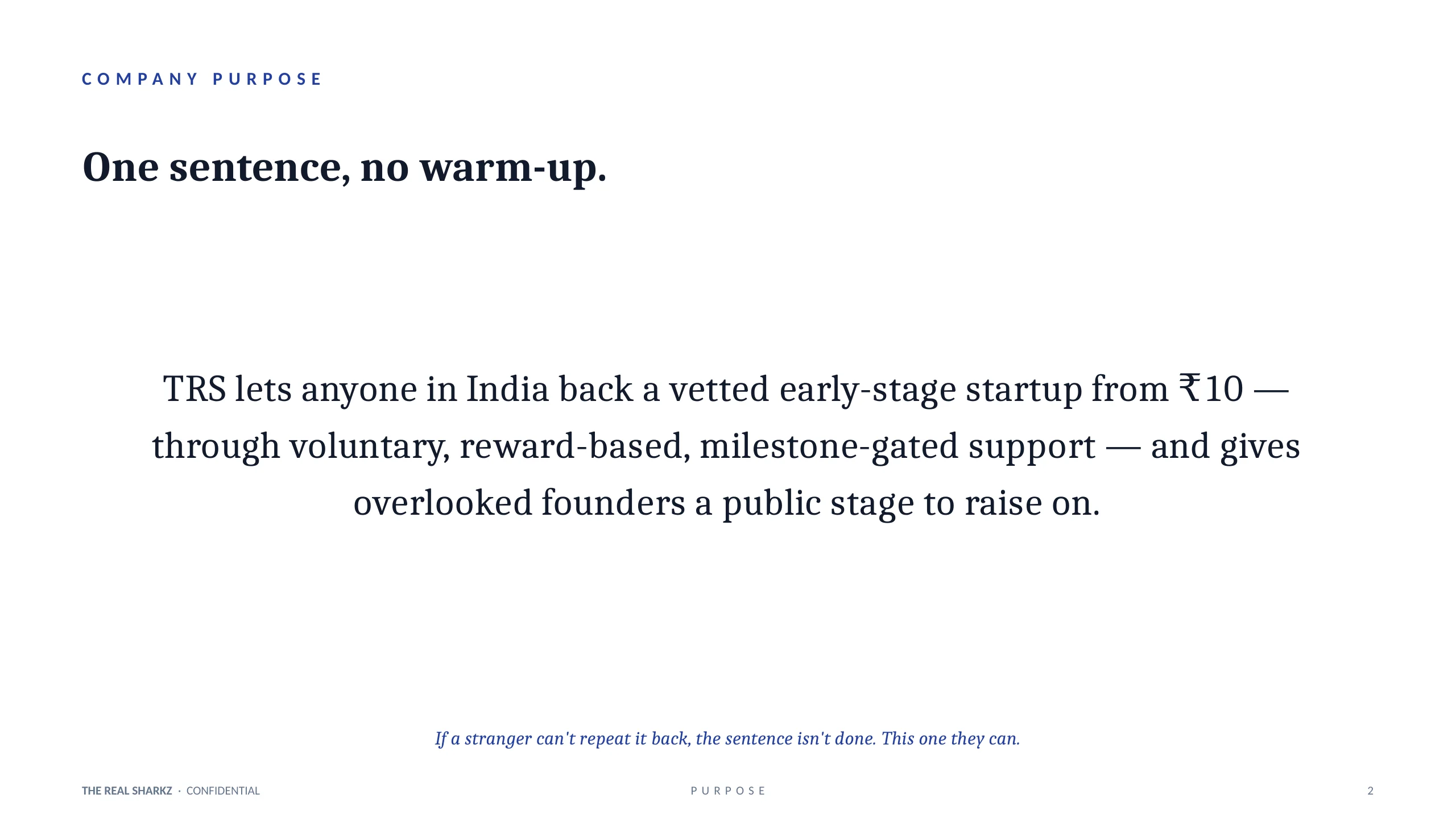 (opens full size in a new tab)
Slide 2 of 16: Company purpose 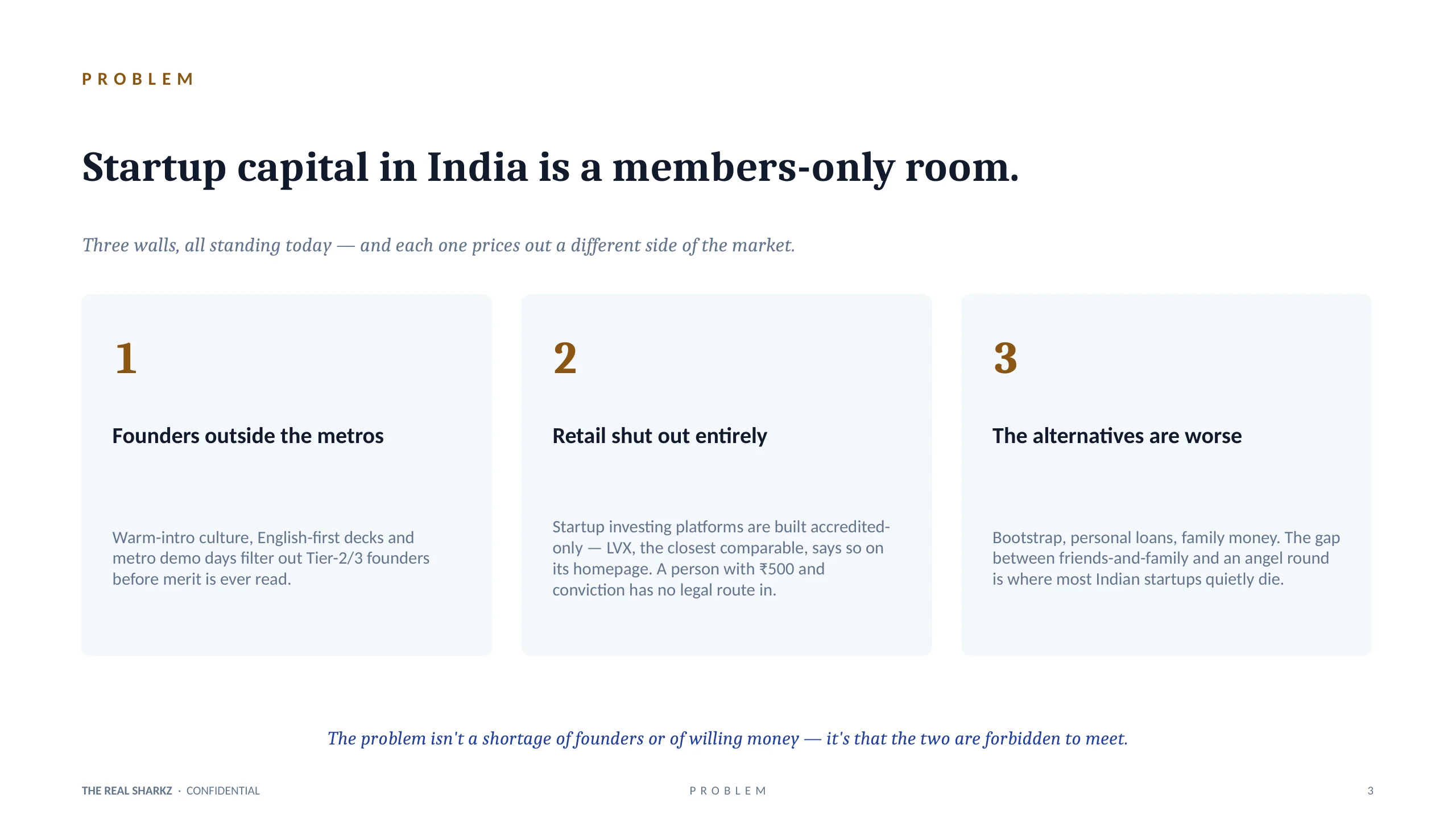 (opens full size in a new tab)
Slide 3 of 16: Problem 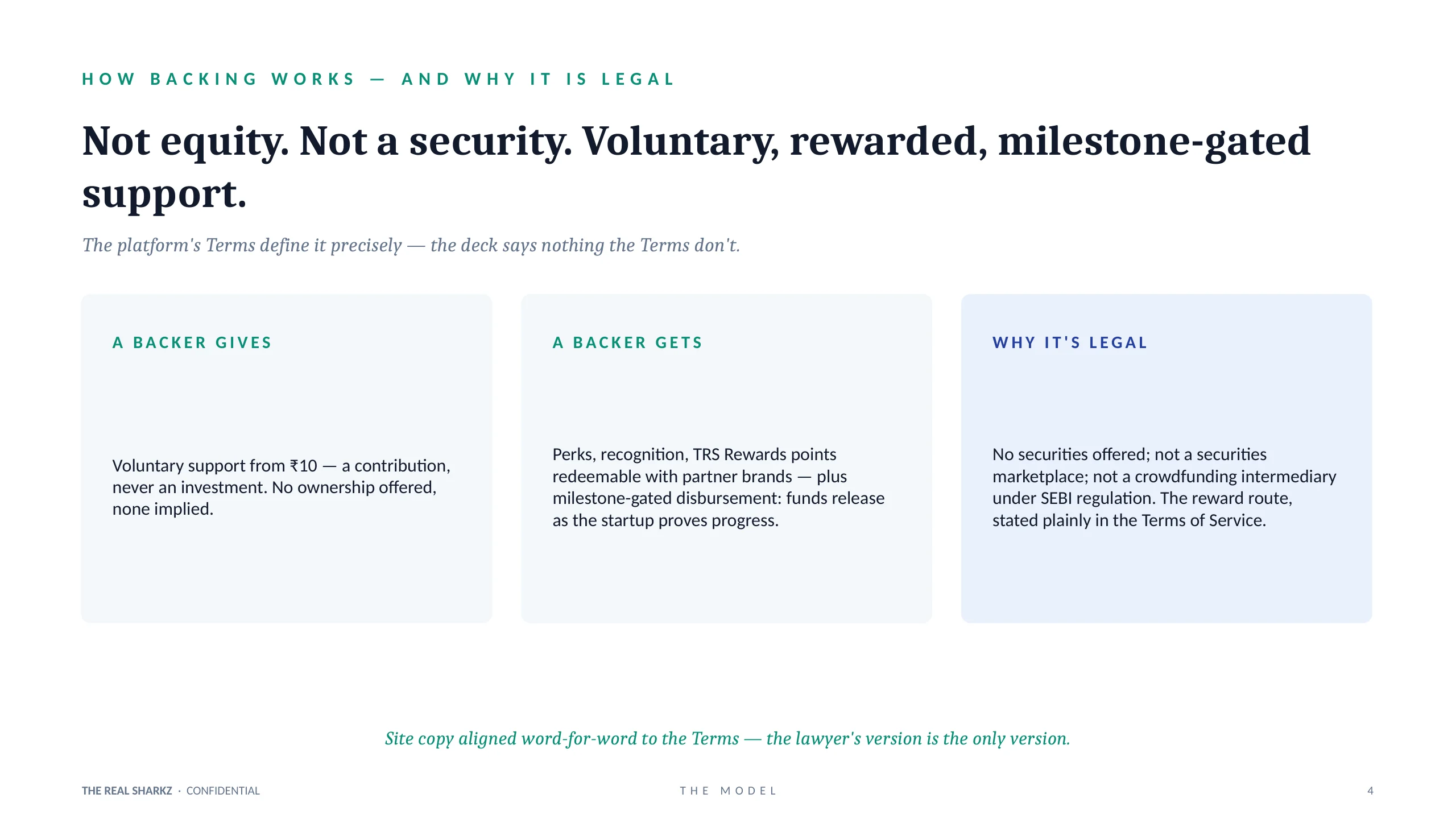 (opens full size in a new tab)
Slide 4 of 16: How backing worksWhy it works. The legal question is answered on slide 4 instead of being left for diligence. A reward-based platform stands or falls on whether it sells securities, so the slide says what a backer gives, what a backer gets, and why no security is offered. 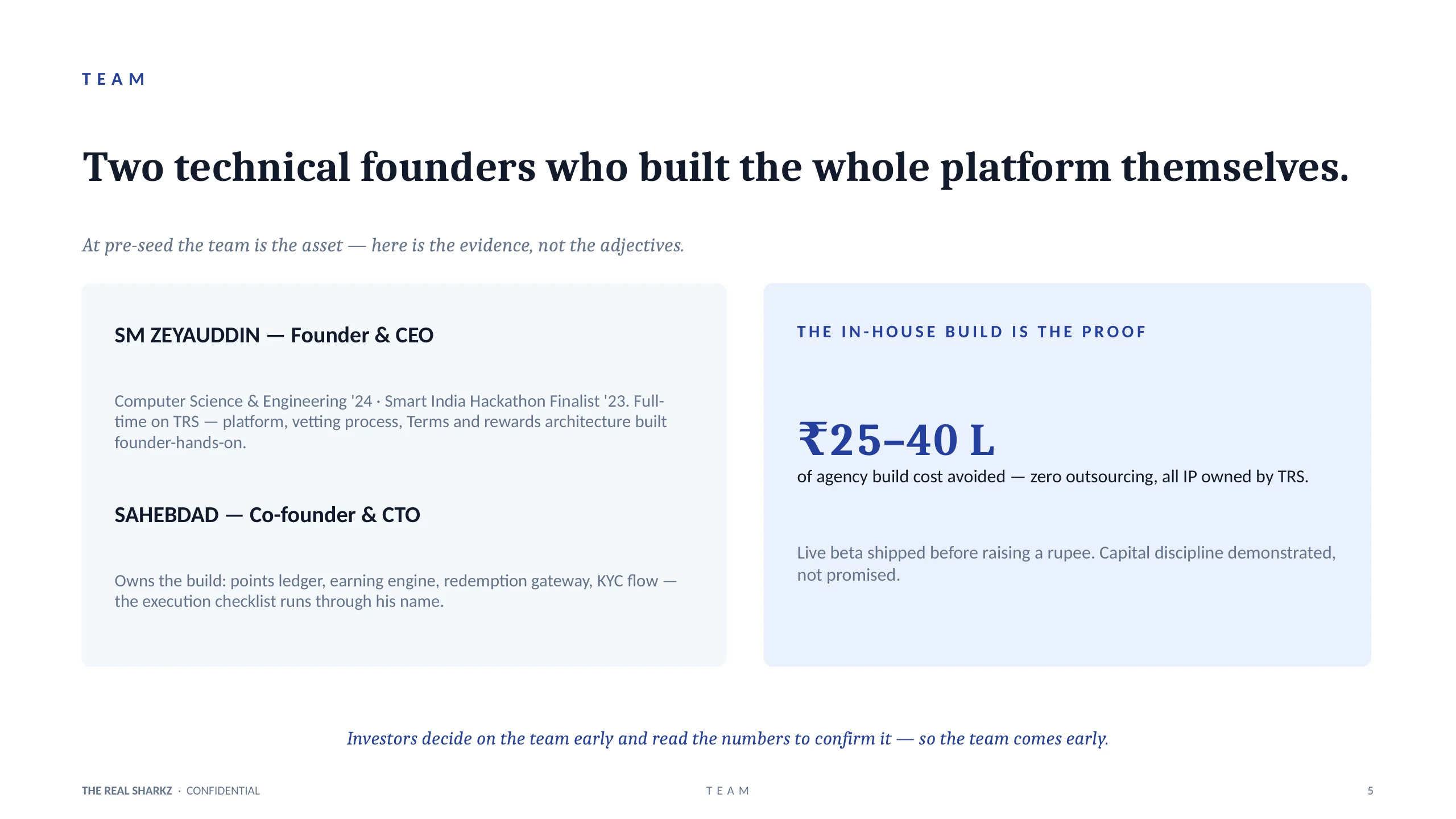 (opens full size in a new tab)
Slide 5 of 16: Team 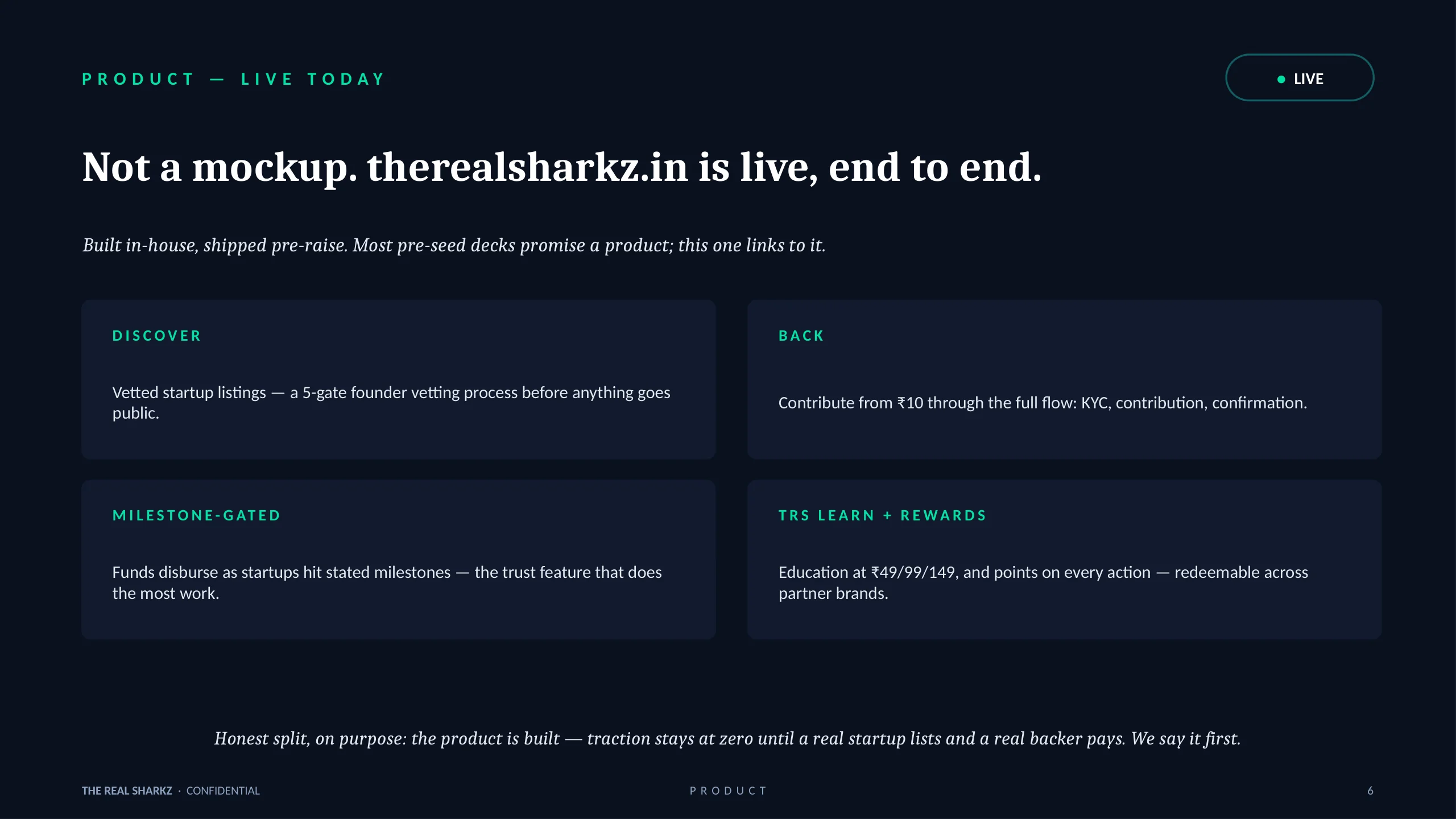 (opens full size in a new tab)
Slide 6 of 16: Product 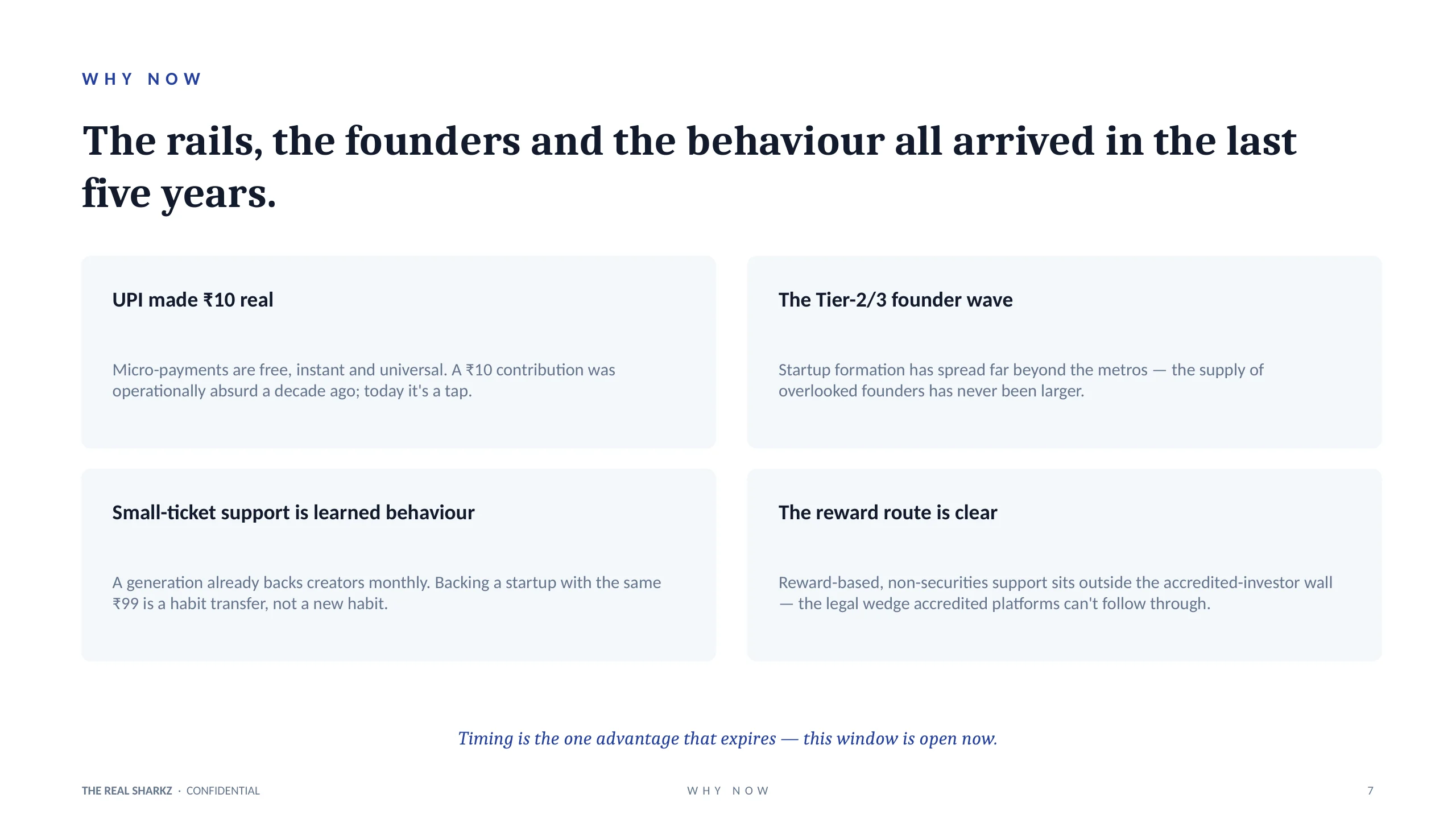 (opens full size in a new tab)
Slide 7 of 16: Why now 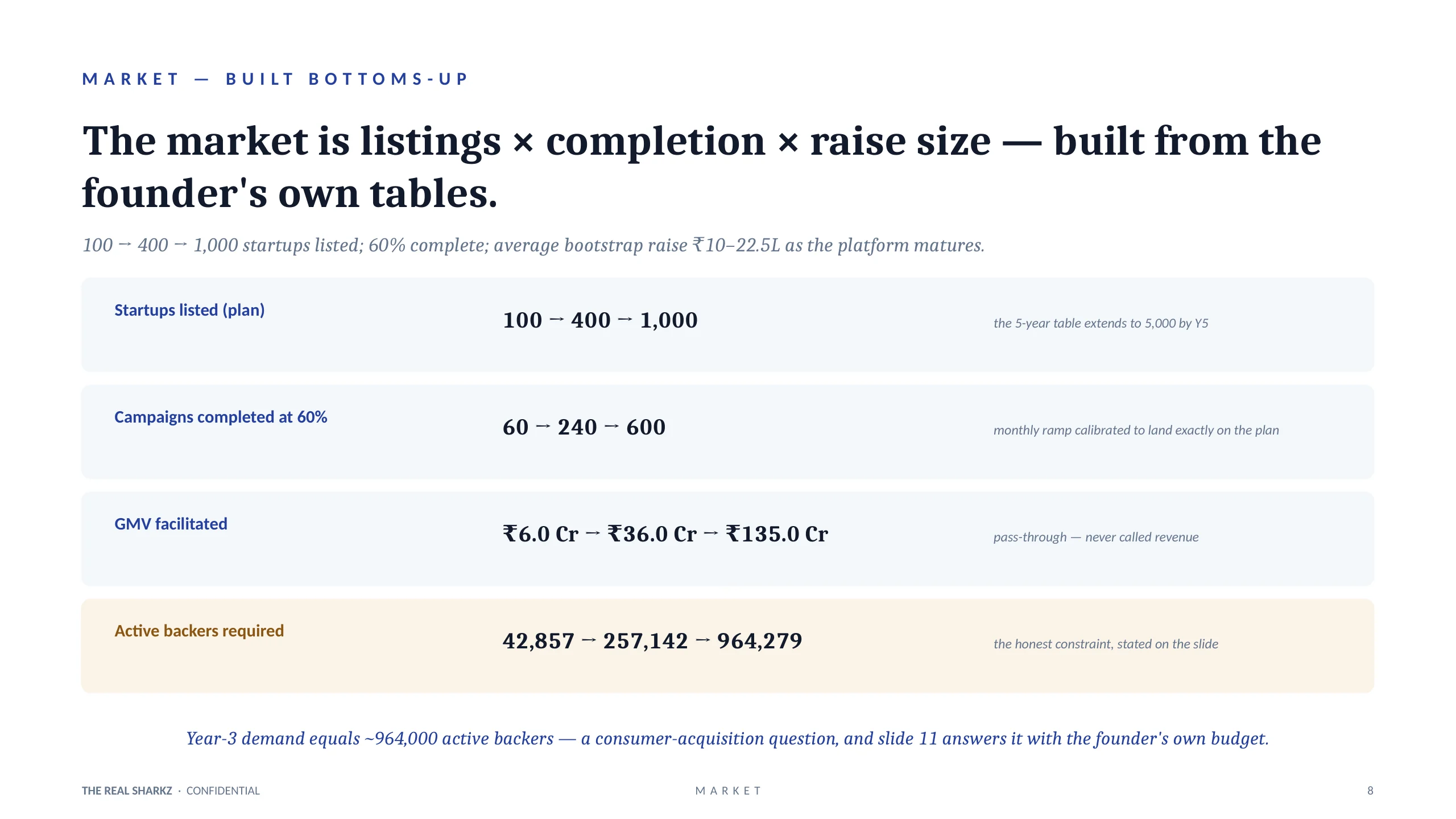 (opens full size in a new tab)
Slide 8 of 16: Market, built bottom-upWhy it works. The market is counted from the founder's own tables: listings × completion rate × average raise. It also states the hard constraint, about 964,000 active backers by Year 3, instead of hiding it. 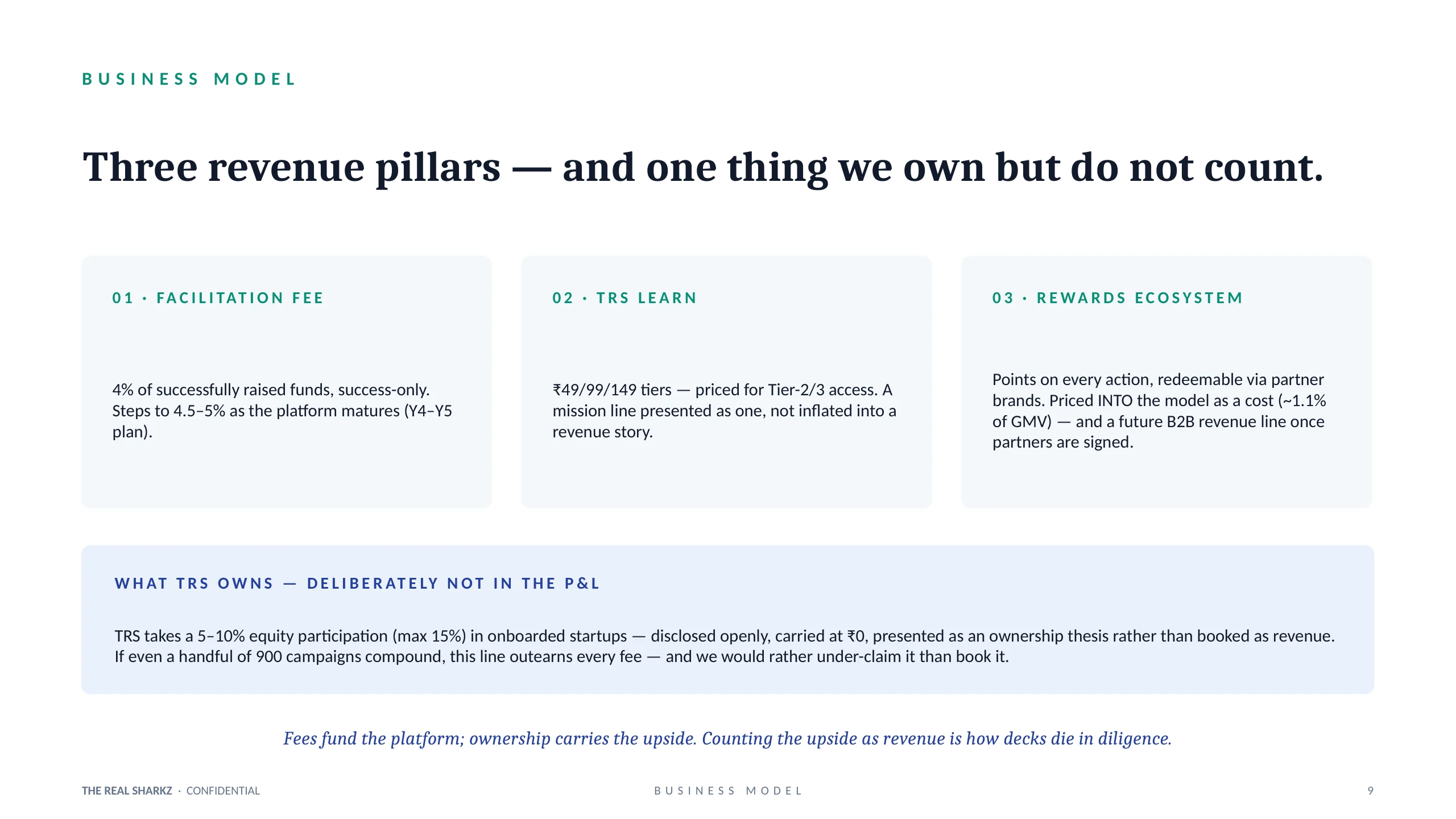 (opens full size in a new tab)
Slide 9 of 16: Business model 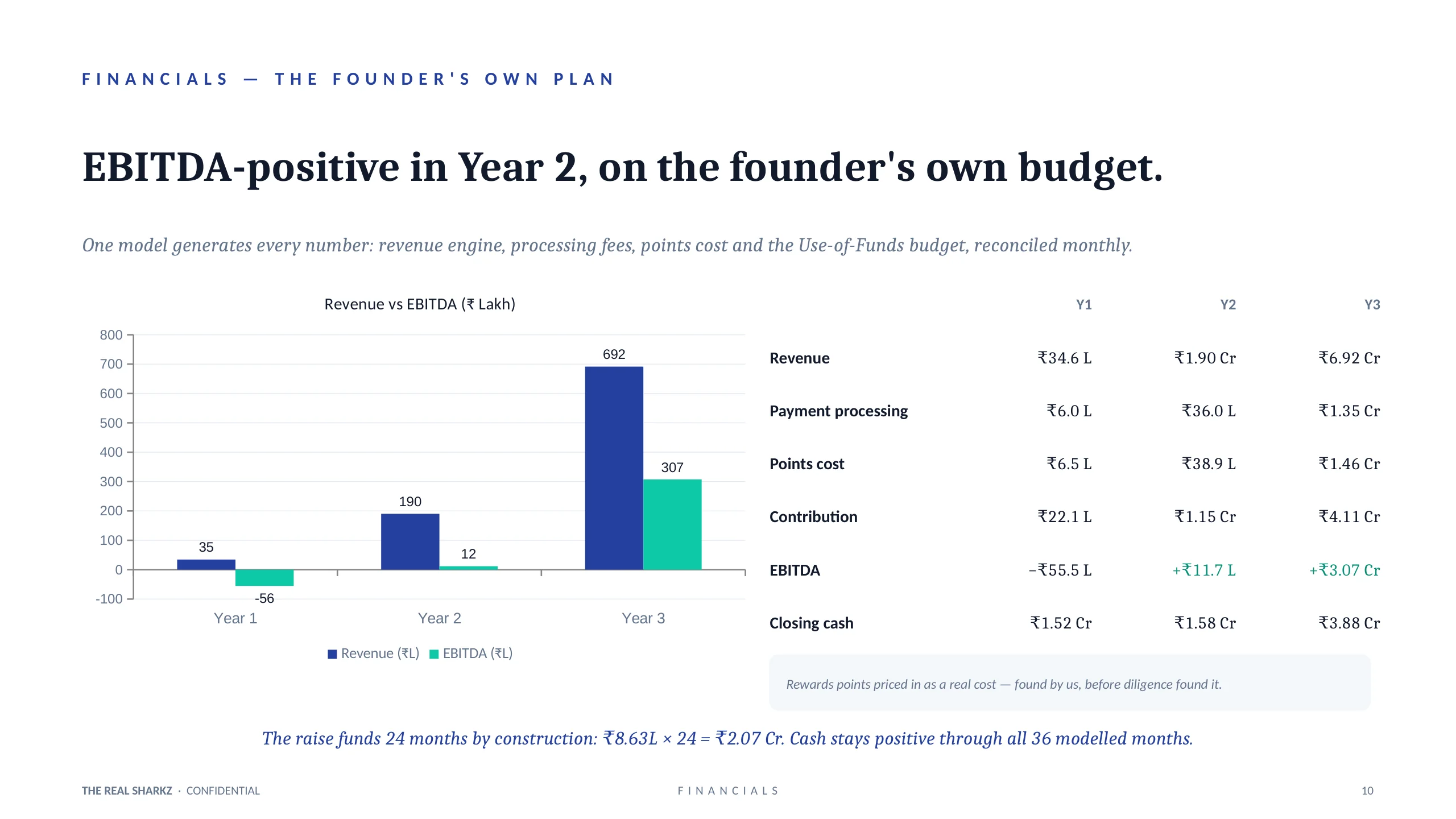 (opens full size in a new tab)
Slide 10 of 16: FinancialsWhy it works. One model produces every figure, and the table shows the working: revenue minus payment processing minus points cost equals contribution in all three years. Year 1: ₹34.6 lakh minus ₹6.0 lakh minus ₹6.5 lakh is ₹22.1 lakh. 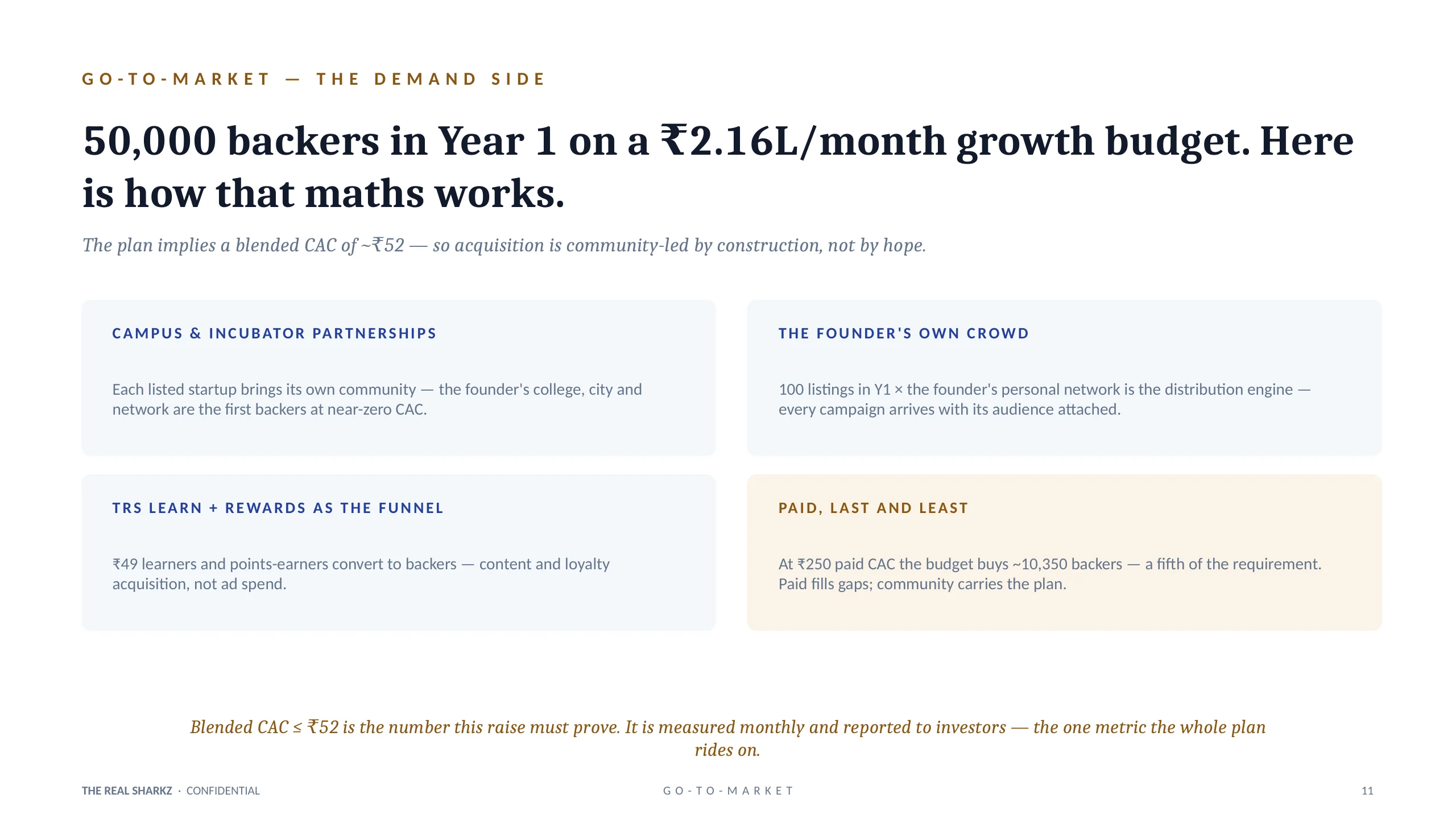 (opens full size in a new tab)
Slide 11 of 16: Go-to-market 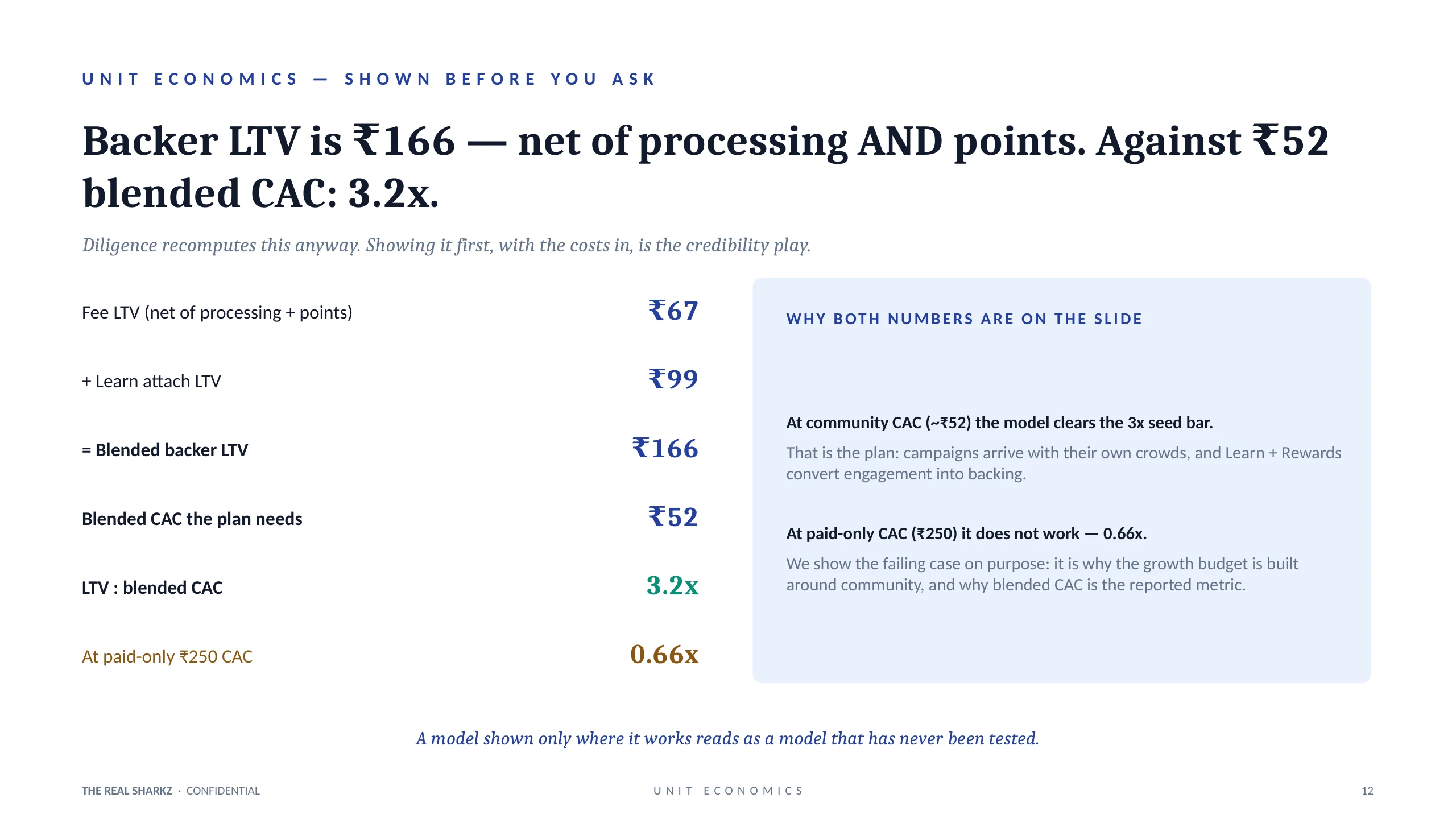 (opens full size in a new tab)
Slide 12 of 16: Unit economicsWhy it works. The failing case sits next to the working one. At the planned ₹52 blended acquisition cost, lifetime value is 3.2 times cost; at ₹250 paid-only it is 0.66 times. Showing where the model breaks is what makes the working case believable. 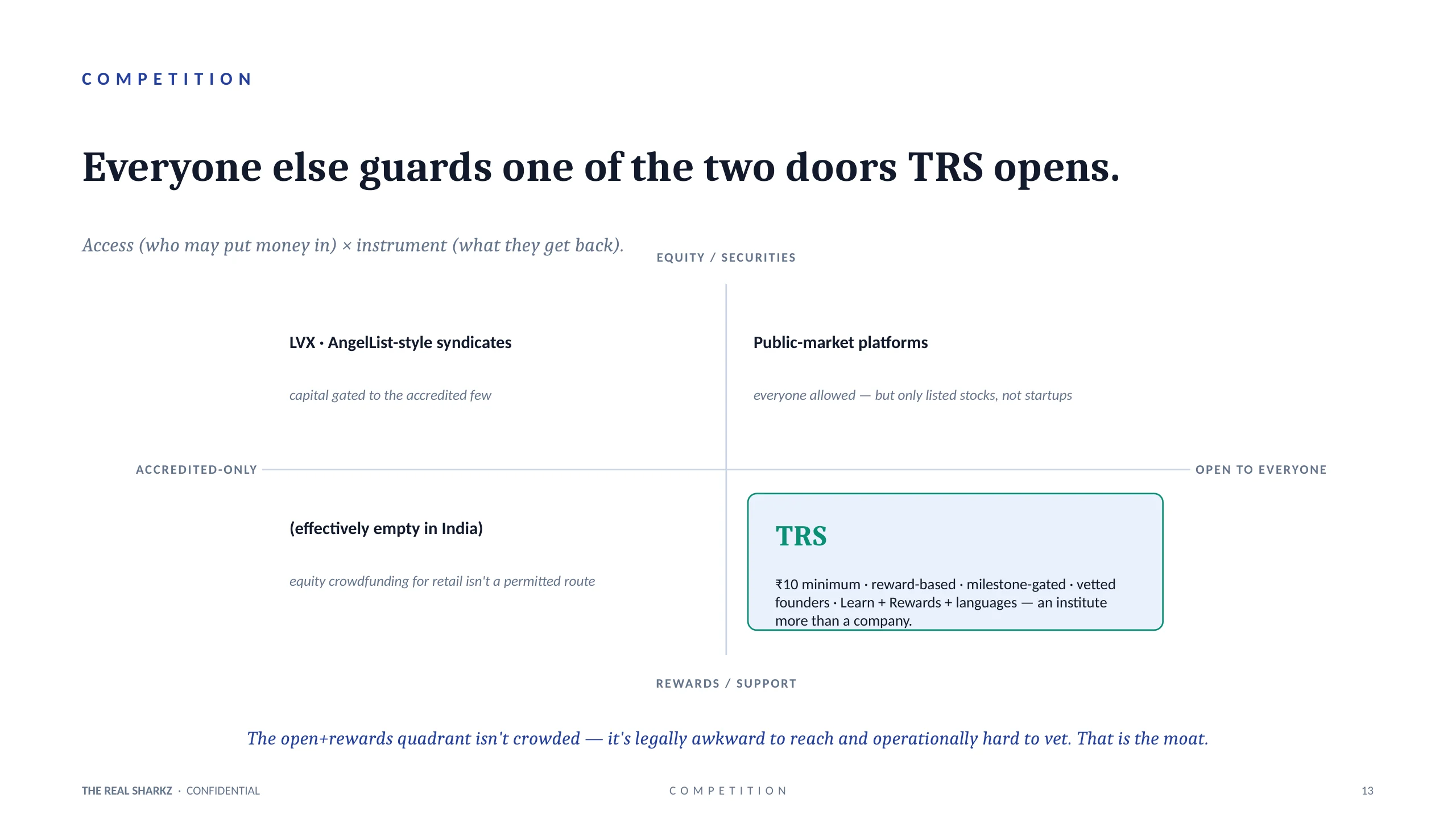 (opens full size in a new tab)
Slide 13 of 16: Competition 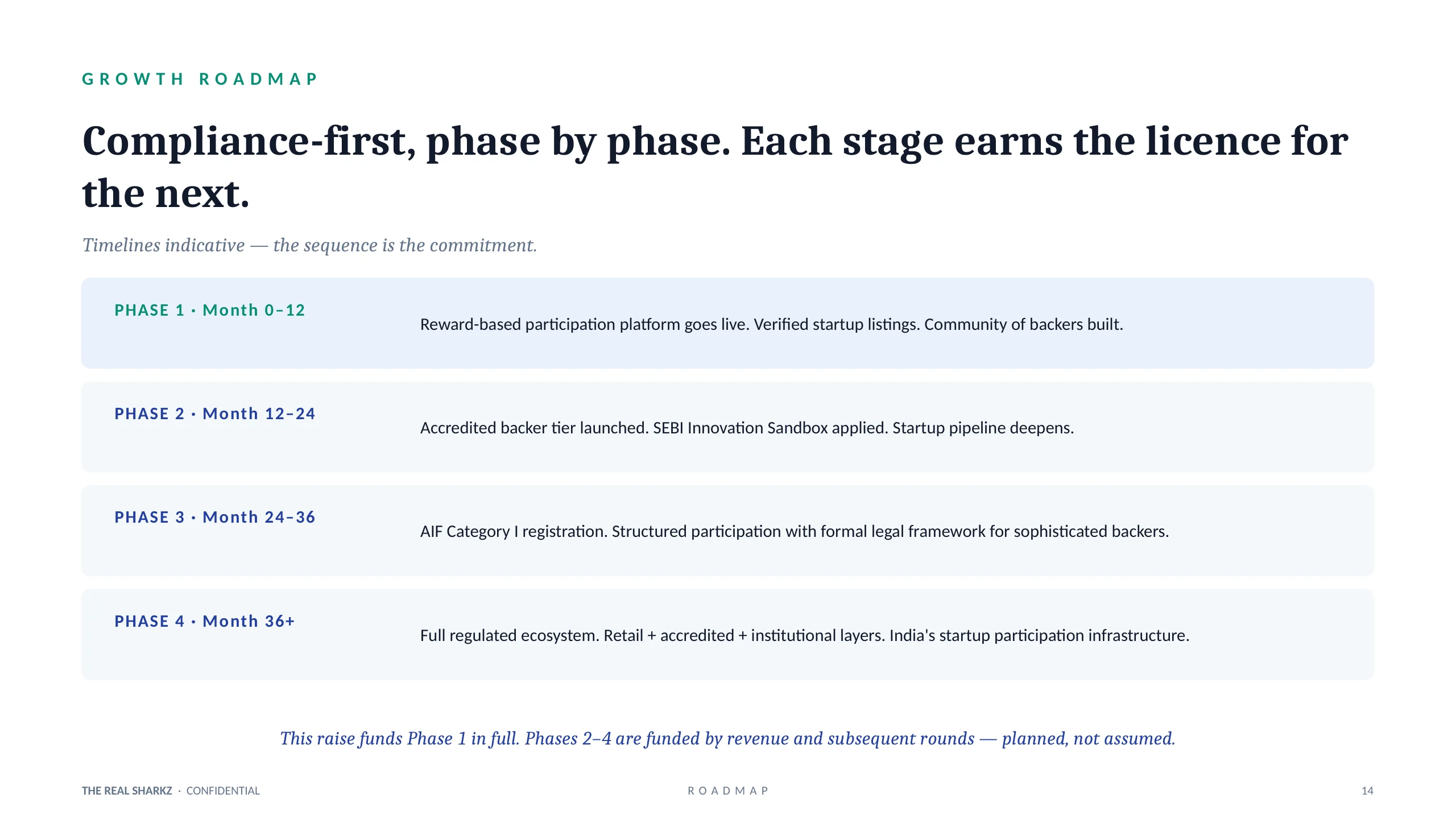 (opens full size in a new tab)
Slide 14 of 16: Growth roadmap 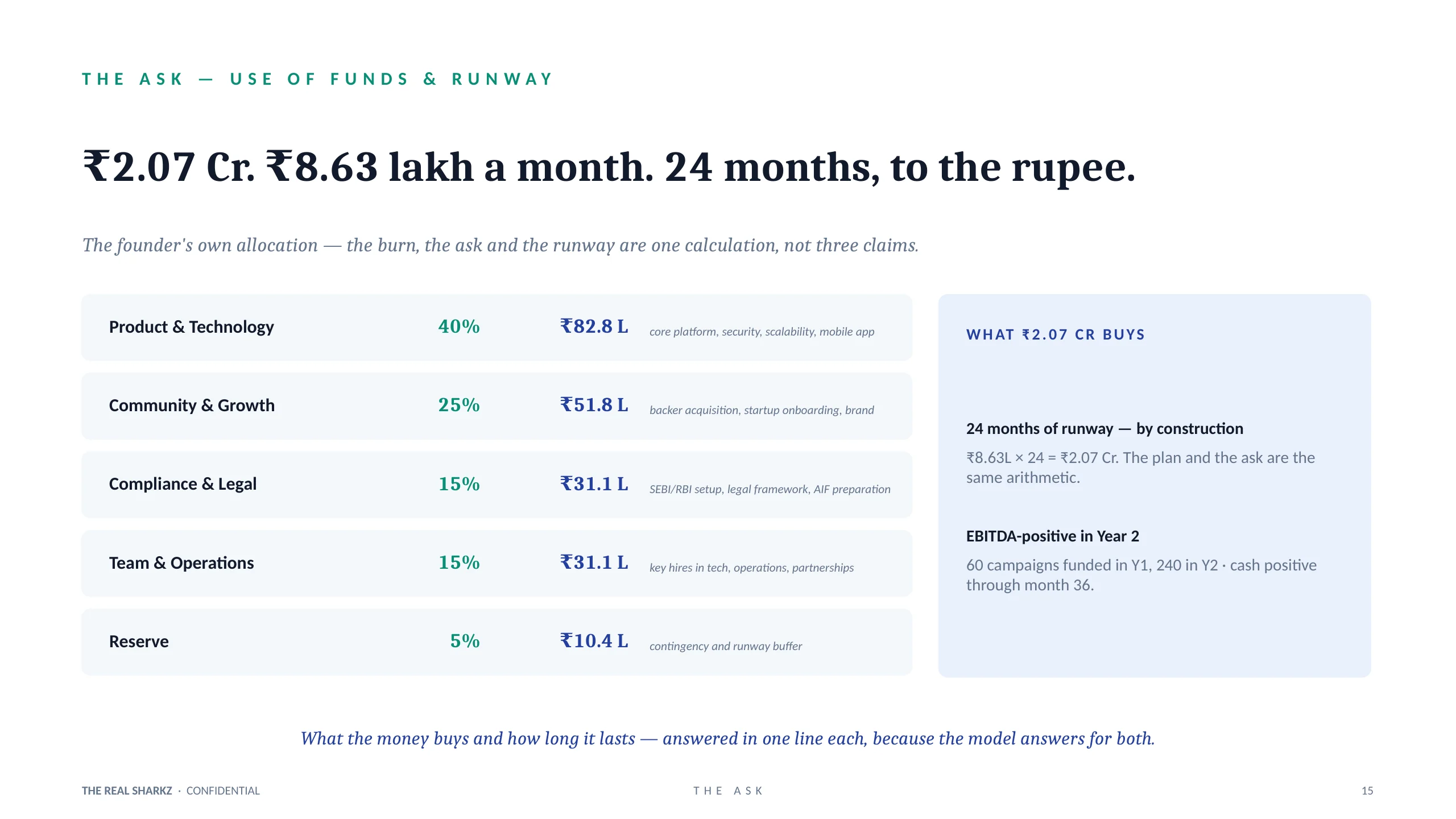 (opens full size in a new tab)
Slide 15 of 16: The ask: use of funds and runwayWhy it works. The ask, the burn and the runway are one calculation: ₹8.63 lakh a month × 24 months = ₹2.07 Cr, and the five use-of-funds lines add up to 100%. 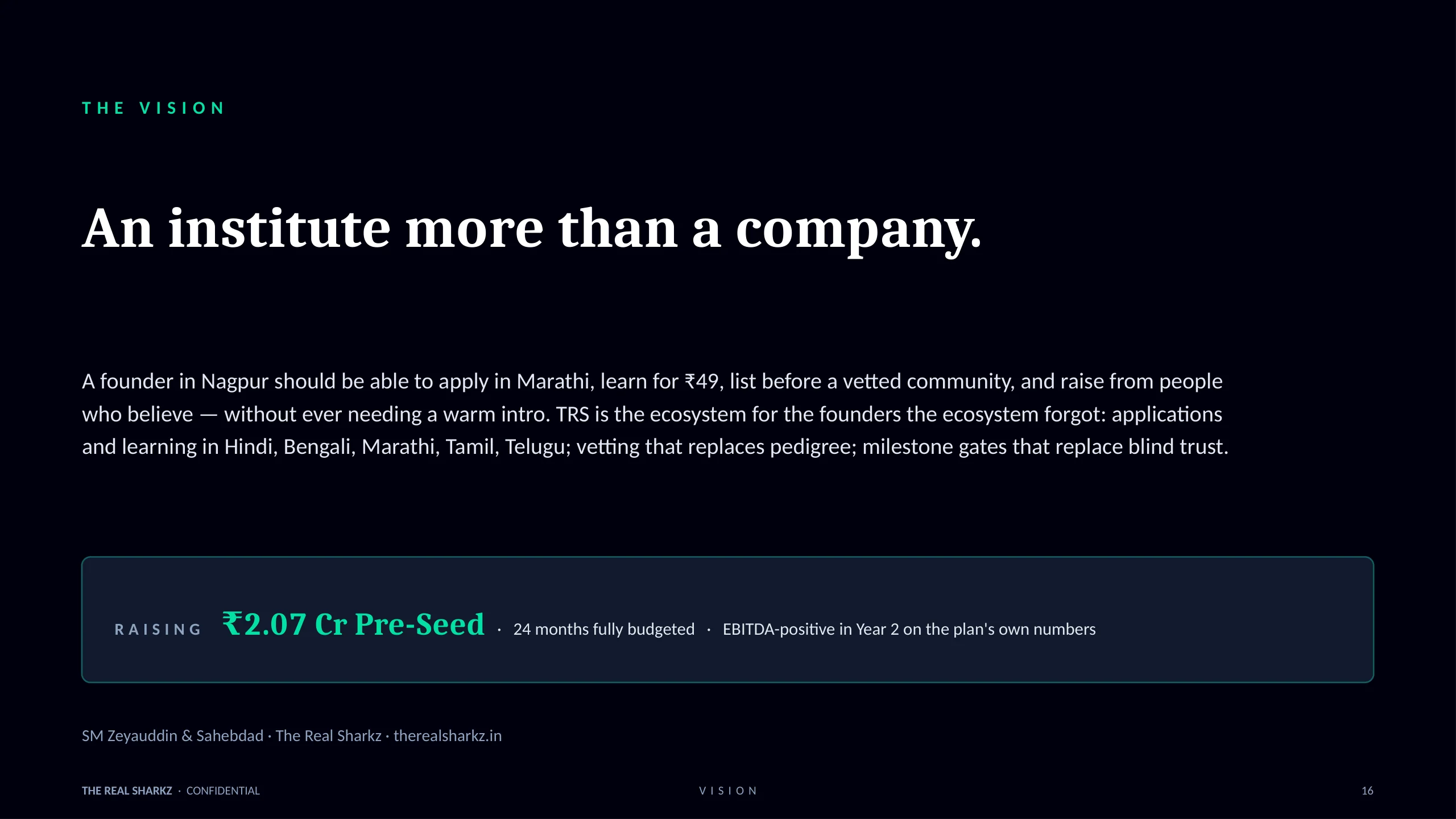 (opens full size in a new tab)
Slide 16 of 16: Vision
Want to know what an investor would ask about your deck? The read is free.